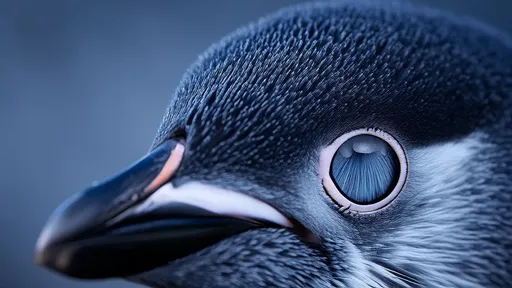
In the frozen expanse of the Arctic, where temperatures plummet to a bone-chilling -40°C, the snow bunting (Plectrophenax nivalis) thrives with seemingly effortless grace. This small, resilient bird has long fascinated scientists, not just for its ability to survive in such extreme conditions, but for the genetic and biochemical secrets that allow it to remain active when most other creatures would succumb to the cold. Recent breakthroughs in genomics and proteomics have begun to unravel the molecular mechanisms behind the snow bunting’s cold resistance, particularly the role of specialized proteins that enable its survival. These discoveries hold promise not only for understanding evolutionary adaptations but also for potential applications in biotechnology and medicine.
The snow bunting’s ability to function in subzero temperatures is rooted in its unique genetic makeup. Researchers have identified a suite of genes that are either upregulated or uniquely expressed in response to extreme cold. Among these, certain proteins stand out for their role in maintaining cellular function under freezing conditions. One such protein, a cold-induced RNA-binding protein (CIRBP), has been shown to stabilize other essential molecules, preventing the cellular damage that typically occurs at low temperatures. This protein acts as a molecular chaperone, ensuring that critical biological processes continue uninterrupted even when the bird’s environment becomes inhospitable.
What makes these proteins particularly remarkable is their efficiency. Unlike many cold-adapted organisms that enter a state of torpor or reduced metabolic activity, the snow bunting remains active, foraging and flying in conditions that would be lethal to most species. This suggests that its cold-resistant proteins are not merely passive protectors but active participants in metabolic pathways. For instance, enzymes in the snow bunting’s muscles exhibit unusual flexibility, allowing them to catalyze reactions at temperatures that would render similar enzymes in other animals inert. This adaptability is thought to be the result of subtle structural differences in the proteins, such as increased hydrogen bonding or altered amino acid sequences that prevent freezing-induced denaturation.
The implications of these findings extend far beyond ornithology. Understanding how the snow bunting’s proteins function at extreme temperatures could revolutionize fields like cryopreservation, where the ability to maintain cellular integrity in freezing conditions is paramount. Medical researchers are particularly interested in how these proteins might be harnessed to improve the storage of organs for transplantation, which currently must be used within a narrow window of time due to the risk of ice crystal formation and cellular damage. Similarly, agricultural scientists are exploring whether genes from the snow bunting could be used to engineer cold-resistant crops, potentially expanding arable land into currently inhospitable regions.
Yet, the road from discovery to application is fraught with challenges. While the snow bunting’s proteins offer a blueprint for cold resistance, replicating their effects in other organisms—or in synthetic systems—requires a deeper understanding of their interactions and regulation. Moreover, ethical and ecological considerations must be weighed when contemplating genetic engineering or bioprospecting. The snow bunting’s adaptations are the product of millions of years of evolution, and tampering with these mechanisms without a full grasp of their broader impacts could have unintended consequences.
Despite these hurdles, the study of the snow bunting’s cold-resistant proteins represents a thrilling frontier in biology. It underscores the incredible diversity of life and the ingenious solutions that evolution can produce. As climate change alters habitats and pushes species to their limits, understanding such adaptations becomes not just a scientific curiosity but a potential lifeline. The snow bunting, a unassuming bird of the Arctic, may yet teach us how to endure in an increasingly unpredictable world.
In the meantime, researchers continue to probe the snow bunting’s genome, searching for other genetic and biochemical secrets. Each discovery adds another piece to the puzzle, revealing how life persists in Earth’s most extreme environments. The story of the snow bunting is a testament to the resilience of nature—and a reminder of how much we still have to learn from it.
By /Aug 12, 2025

By /Aug 12, 2025

By /Aug 12, 2025
By /Aug 12, 2025
By /Aug 12, 2025
By /Aug 12, 2025
By /Aug 12, 2025

By /Aug 12, 2025

By /Aug 12, 2025
By /Aug 12, 2025

By /Aug 12, 2025
By /Aug 12, 2025

By /Aug 12, 2025

By /Aug 12, 2025

By /Aug 12, 2025

By /Aug 12, 2025

By /Aug 12, 2025

By /Aug 12, 2025

By /Aug 12, 2025
By /Aug 12, 2025